"Don't Break The Ice" - Toy Packaging Design

OVERVIEW

This concept merges the classic family game "Don't Break the Ice" with the excitement of blind box collectibles, offering players both the thrill of surprise and the fun of interactive gameplay. From the moment the package is opened, the adventure begins—with collectible figures and a dynamic ice-breaking challenge.

YEAR

2025

ROLE

SOFTWARE

Adobe Creative Suite

Rhino 3D

Product Design

Packaging Design

Visual Design

Prototyping

About the project

This project reimagines the classic family board game "Don't Break the Ice" by integrating a blind box collectible system into its packaging and gameplay. Originally produced by Hasbro, the game centers on carefully tapping out ice blocks without causing the penguin to fall.

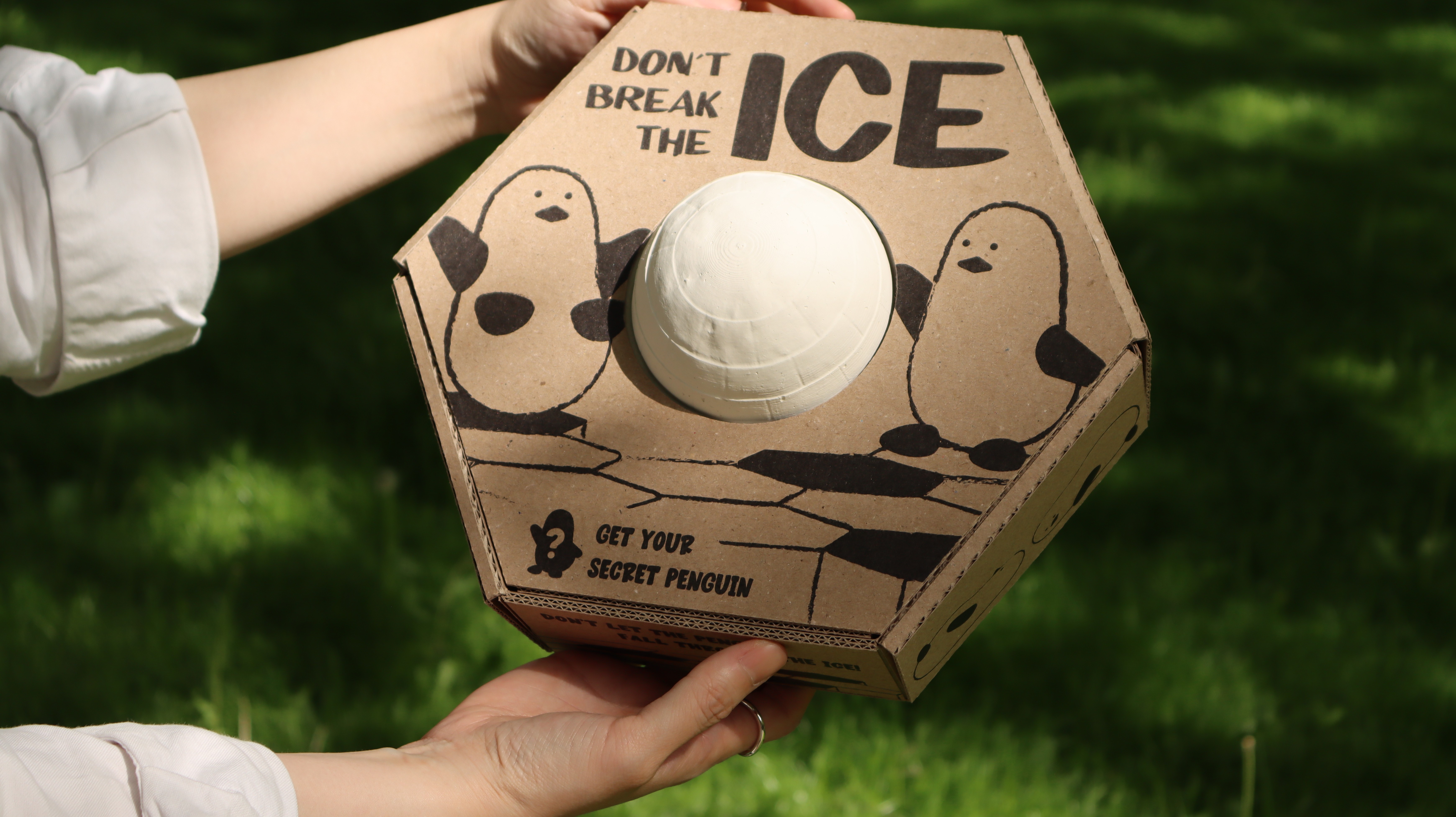
In this redesigned version, the traditional box is transformed into an ice house–shaped blind box. When players open the top portion of the packaging, they receive one randomly selected penguin character — either a standard design or a hidden limited-edition variant.

By combining physical gameplay with collectible surprise elements, the experience extends beyond simply “not breaking the ice” — it becomes a playful moment of anticipation, discovery, and character attachment.

"Don't Break The Ice" -
Toy Packaging Design
OVERVIEW

This concept merges the classic family game "Don't Break the Ice" with the excitement of blind box collectibles, offering players both the thrill of surprise and the fun of interactive gameplay. From the moment the package is opened, the adventure begins—with collectible figures and a dynamic ice-breaking challenge.

YEAR

2025

ROLE

Product Design

Packaging Design

Visual Design

Prototyping

SOFTWARE

Adobe Creative Suite

Rhino 3D

About the project

This project reimagines the classic family board game "Don't Break the Ice" by integrating a blind box collectible system into its packaging and gameplay. Originally produced by Hasbro, the game centers on carefully tapping out ice blocks without causing the penguin to fall.

In this redesigned version, the traditional box is transformed into an ice house–shaped blind box. When players open the top portion of the packaging, they receive one randomly selected penguin character — either a standard design or a hidden limited-edition variant.

By combining physical gameplay with collectible surprise elements, the experience extends beyond simply “not breaking the ice” — it becomes a playful moment of anticipation, discovery, and character attachment.

"Don't Break The Ice" - Toy Packaging Design

OVERVIEW

This concept merges the classic family game "Don't Break the Ice" with the excitement of blind box collectibles, offering players both the thrill of surprise and the fun of interactive gameplay.

YEAR

2025

ROLE

Product Design

Packaging Design

Visual Design

Prototyping

SOFTWARE

Adobe Creative Suite

Rhino 3D

About the project

This project reimagines the classic family board game "Don't Break the Ice" by integrating a blind box collectible system into its packaging and gameplay. Originally produced by Hasbro, the game centers on carefully tapping out ice blocks without causing the penguin to fall.


In this redesigned version, the traditional box is transformed into an ice house–shaped blind box. When players open the top portion of the packaging, they receive one randomly selected penguin character — either a standard design or a hidden limited-edition variant.


By combining physical gameplay with collectible surprise elements, the experience extends beyond simply “not breaking the ice” — it becomes a playful moment of anticipation, discovery, and character attachment.

- Packaging Structure -

Igloo-shaped Blind Box (Top Layer):

The outer packaging is designed to resemble an igloo. After opening, players will find one random character, there's also a chance to get the special edition figure.

Game Component Box (Bottom Layer):

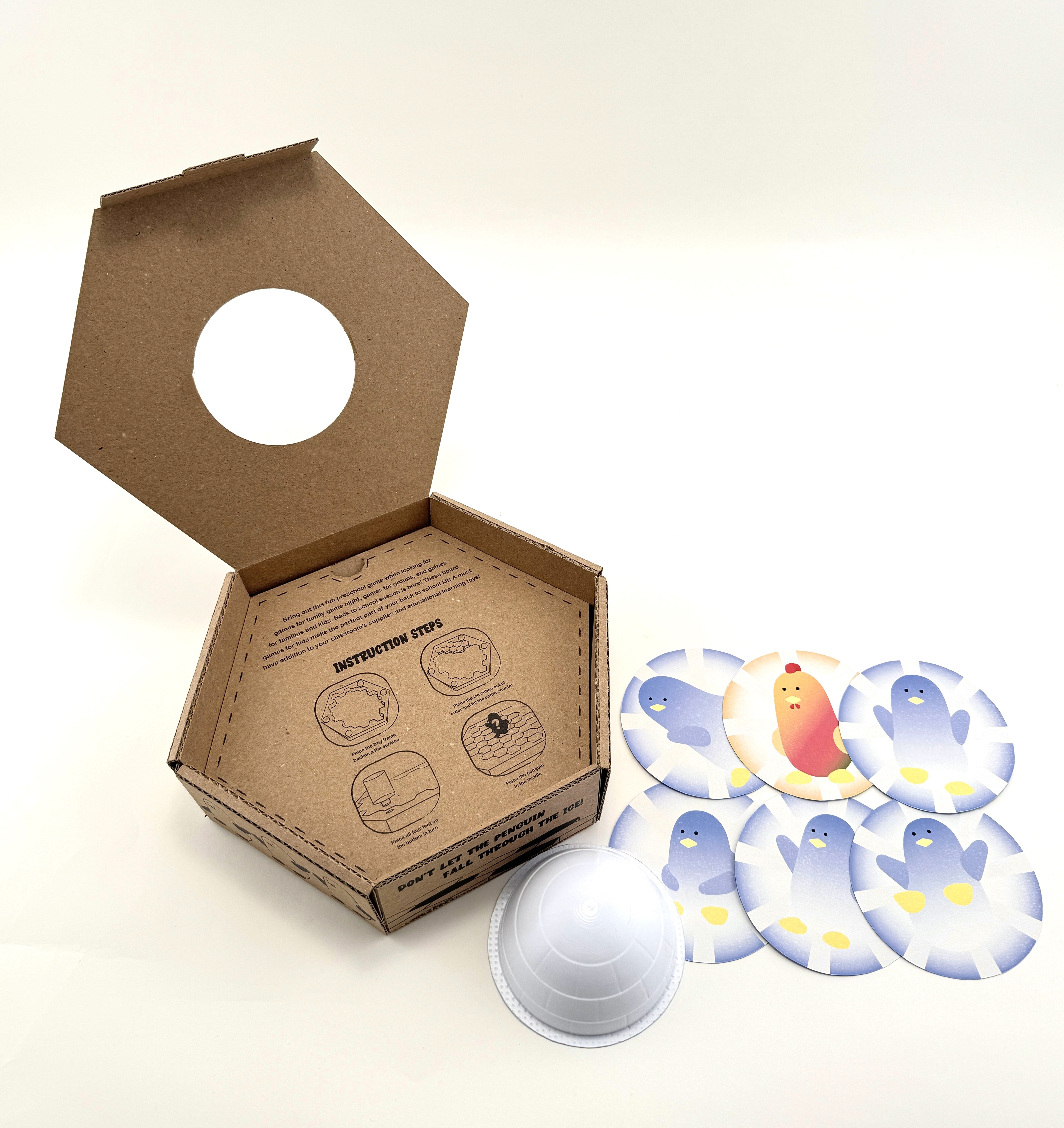
This box mimics the hexagonal shape of the game board, tying in with the game’s visual identity.


Inside, the components are organized into two layers:

Top Layer: Game board and detachable ice blocks.

Bottom Layer: Hammers, spinner, and support legs. The two-layered design allows users to easily put the game back into the box.

Igloo Blind Box (Top Layer):

The outer packaging is designed to resemble an igloo. After opening, players will find one random character, there's also a chance to get the special edition figure.


Game Component Box (Bottom Layer):

This box mimics the hexagonal shape of the game board, tying in with the game’s visual identity.

Inside, the components are organized into two layers:

Top Layer: Game board and detachable ice blocks.

Bottom Layer: Hammers, spinner, and support legs.

The two-layered design allows users to easily put the game back into the box.

- Blind Box Character Design -

Meet the Penguin Family


The collection features five penguins, each designed in a distinct pose, along with a rooster attempting to infiltrate the penguin family. Every character comes with its own identity card, which also functions as the top lid of the igloo-shaped blind box, integrating storytelling with the structural packaging design.

Meet the Penguin Family

The collection features five penguins, each designed in a distinct pose, along with a rooster attempting to infiltrate the penguin family. Every character comes with its own identity card, which also functions as the top lid of the igloo-shaped blind box, integrating storytelling with the structural packaging design.

- Visual Design -

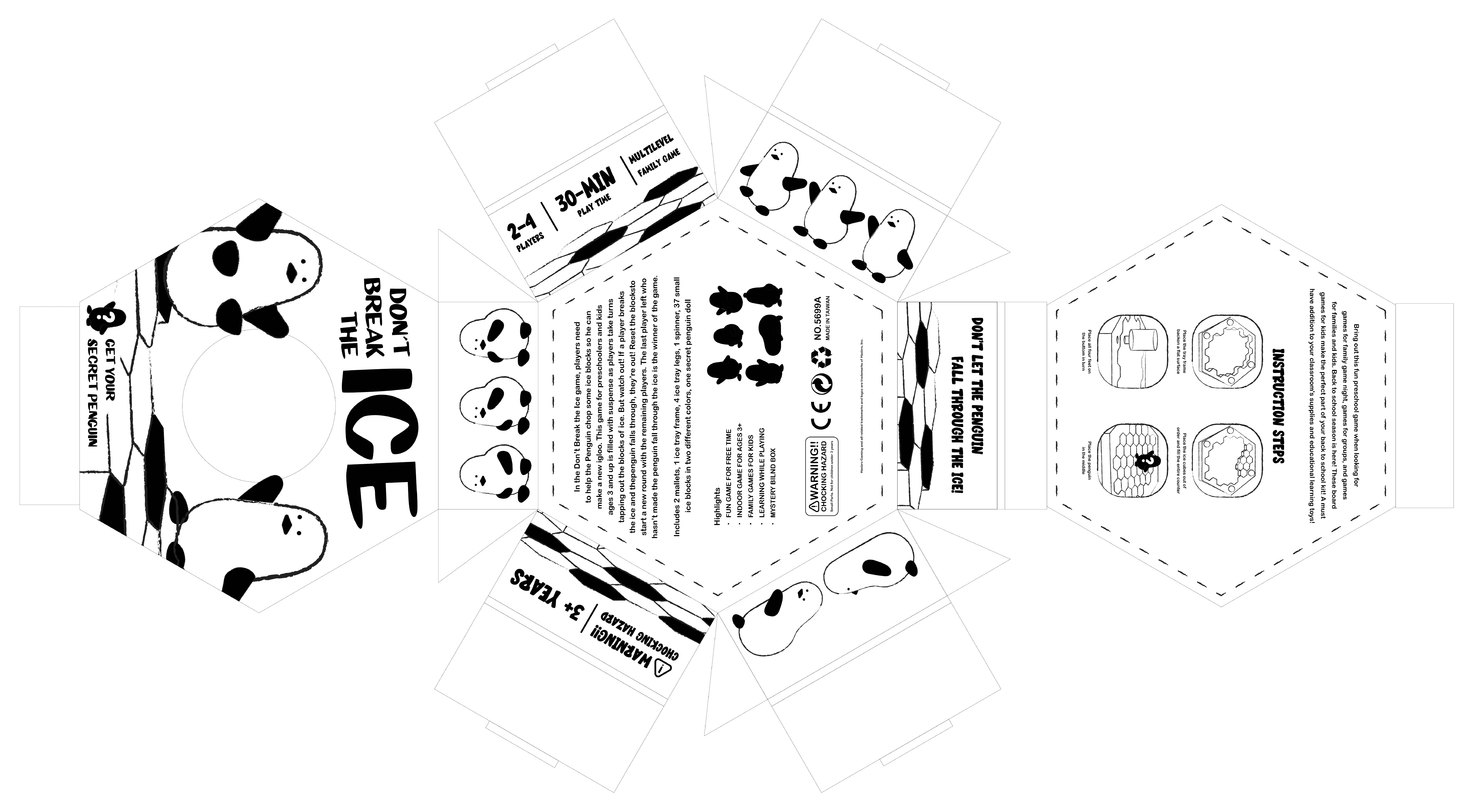
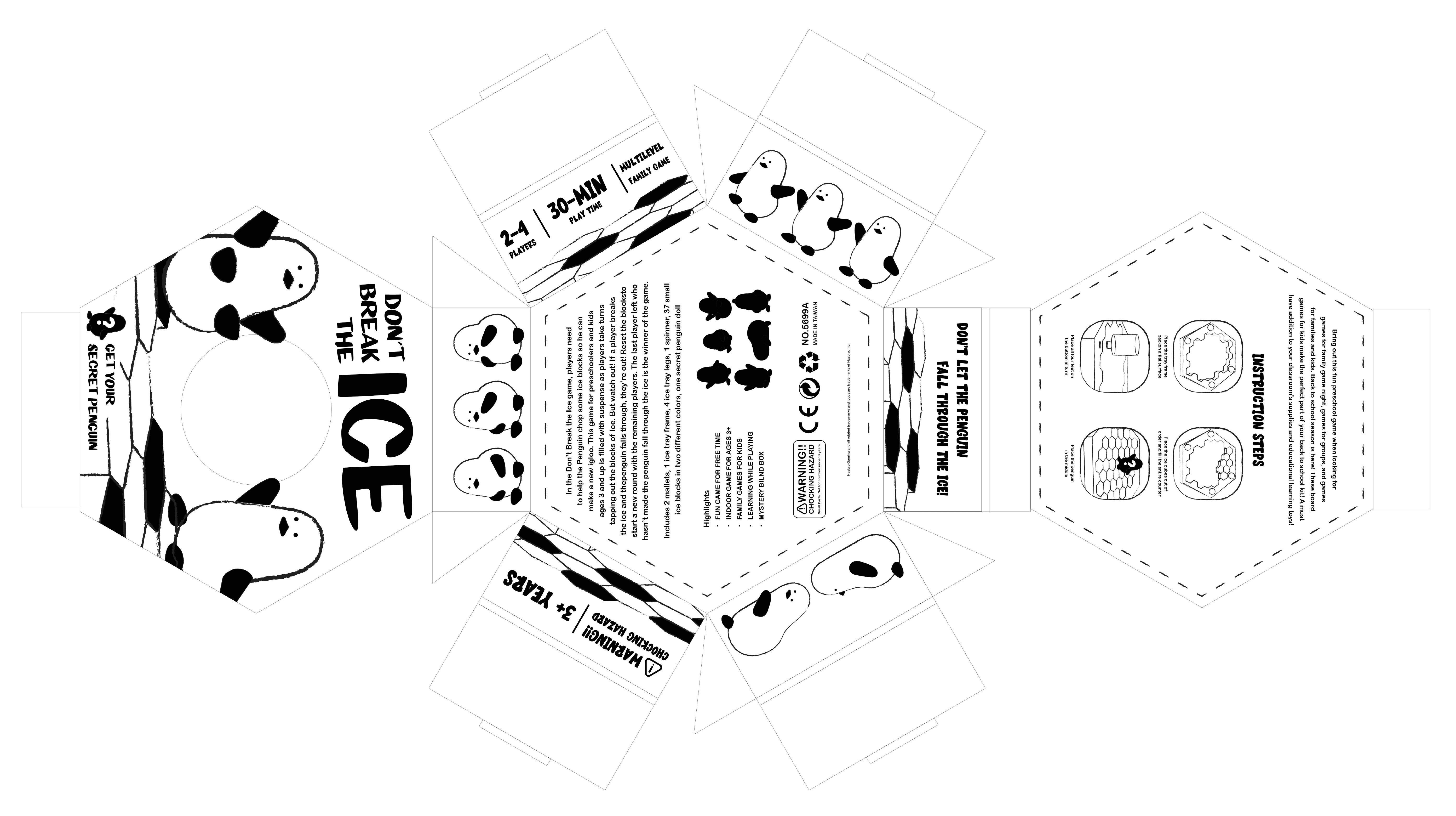
The dieline for the new packaging design is developed for corrugated board printing. Its multi-layered structure creates additional surface areas, allowing the visual graphics and game instructions to be clearly organized and distributed across different panels. And on the right is a closer look of the design for the identity cards.

The dieline for the new packaging design is developed for corrugated board printing. Its multi-layered structure creates additional surface areas, allowing the visual graphics and game instructions to be clearly organized and distributed across different panels. And on the right is a closer look of the design for the identity cards.

- 3D Modeling -

Outer graphic design from different perspective

After removing the blind box and the game board, players will find the game instructions printed on the bottom of the first layer. By lifting this layer, they can access the second layer, which contains the remaining game components.

Outer graphic design from different perspective

After removing the blind box and the game board, players will find the game instructions printed on the bottom of the first layer. By lifting this layer, they can access the second layer, which contains the remaining game components.

- Prototyping -

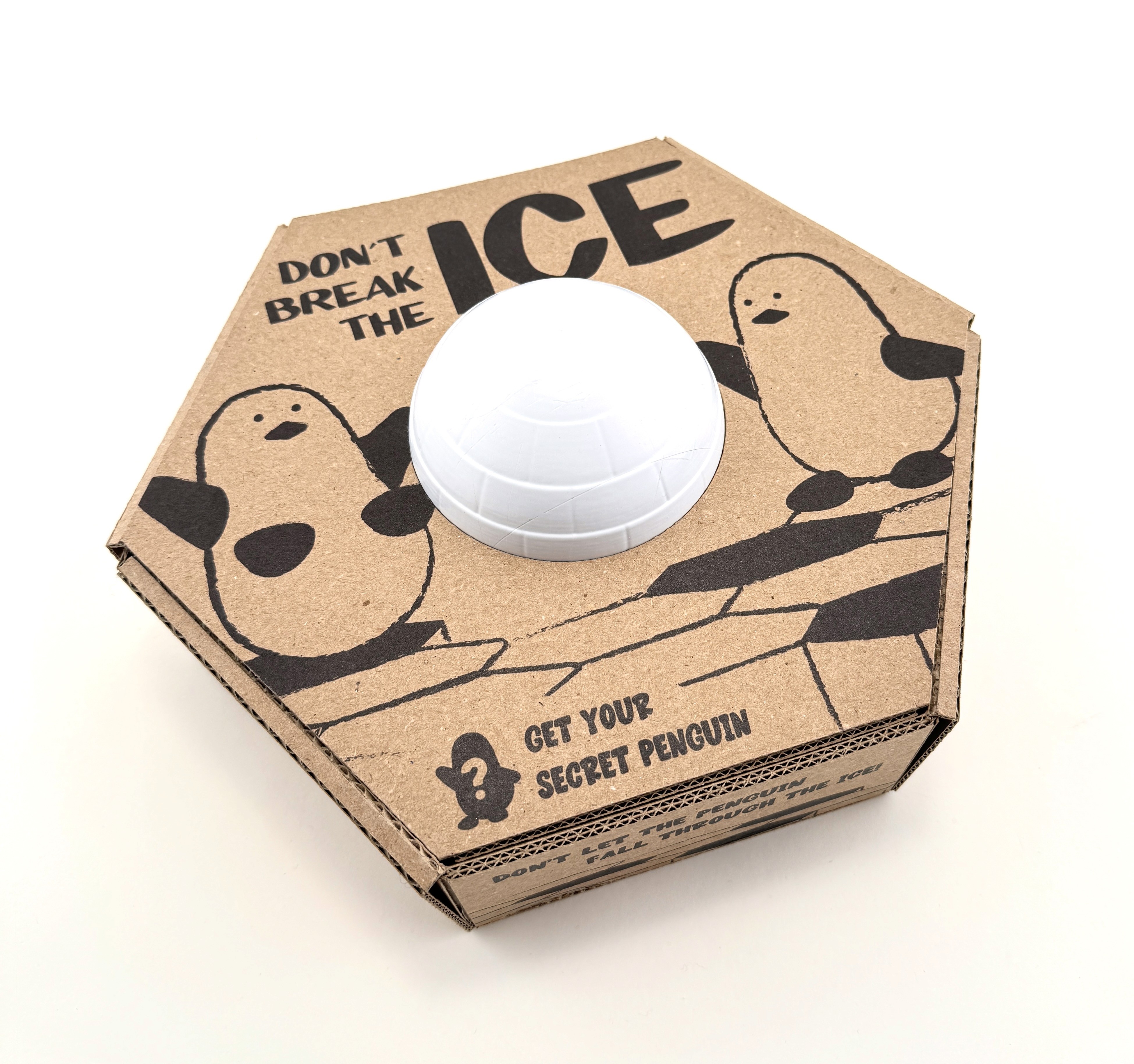
The igloo pattern was created using vacuum forming to capture the fine, thin-line details of the design. However, the current plastic material is not ideal due to its limited recyclability. Moving forward, I am exploring alternative materials that can achieve similar structural precision while offering a more sustainable solution.

The igloo pattern was created using vacuum forming to capture the fine, thin-line details of the design. However, the current plastic material is not ideal due to its limited recyclability. Moving forward, I am exploring alternative materials that can achieve similar structural precision while offering a more sustainable solution.

- Sustainable Material Exploration -

- Sustainable Material Exploration -

The new igloo box was made by mixing tissue paper and clay with water and glue to create a pulp-like material. To preserve the igloo pattern, the mixture had to be carefully pressed onto the mold and left to dry for 24 hours. After 48 hours, the structure became strong enough to securely hold a character inside.


The resulting material has a paper-like texture and provides sufficient rigidity to support the character card as the lid. It also creates a satisfying peeling experience when opening the box, enhancing the sense of discovery during the reveal.

The new igloo box was made by mixing tissue paper and clay with water and glue to create a pulp-like material. To preserve the igloo pattern, the mixture had to be carefully pressed onto the mold and left to dry for 24 hours. After 48 hours, the structure became strong enough to securely hold a character inside.

The resulting material has a paper-like texture and provides sufficient rigidity to support the character card as the lid. It also creates a satisfying peeling experience when opening the box, enhancing the sense of discovery during the reveal.

Mixture created from
paper, clay, water and glue.

Mixture created from
paper, clay, water and glue.

Ensure the material is applied evenly across the surface.

Ensure the material is applied evenly across the surface.

Smooth Scroll
This will hide itself!
- Packaging Structure -
- Blind Box Character Design -

Meet the Penguin Family


The collection features five penguins, each designed in a distinct pose, along with a rooster attempting to infiltrate the penguin family. Every character comes with its own identity card, which also functions as the top lid of the igloo-shaped blind box, integrating storytelling with the structural packaging design.

Igloo Blind Box (Top Layer):

The outer packaging is designed to resemble an igloo. After opening, players will find one random character, there's also a chance to get the special edition figure.


Game Component Box (Bottom Layer):

This box mimics the hexagonal shape of the game board, tying in with the game’s visual identity.


Inside, the components are organized into two layers: Top Layer: Game board and detachable ice blocks. Bottom Layer: Hammers, spinner, and support legs.


The two-layered design allows users to easily put the game back into the box.

- 3D Modeling -
- Visual Design -

Outer graphic design from different perspective

After removing the blind box and the game board, players will find the game instructions printed on the bottom of the first layer. By lifting this layer, they can access the second layer, which contains the remaining game components.

The dieline for the new packaging design is developed for corrugated board printing. Its multi-layered structure creates additional surface areas, allowing the visual graphics and game instructions to be clearly organized and distributed across different panels. And on the right is a closer look of the design for the identity cards.

- Prototyping -

Mixture created from paper, clay, water and glue.

Ensure the material is applied evenly across the surface.

- Prototyping -

The igloo pattern was created using vacuum forming to capture the fine, thin-line details of the design. However, the current plastic material is not ideal due to its limited recyclability. Moving forward, I am exploring alternative materials that can achieve similar structural precision while offering a more sustainable solution.

The new igloo box was made by mixing tissue paper and clay with water and glue to create a pulp-like material. To preserve the igloo pattern, the mixture had to be carefully pressed onto the mold and left to dry for 24 hours. After 48 hours, the structure became strong enough to securely hold a character inside.

The resulting material has a paper-like texture and provides sufficient rigidity to support the character card as the lid. It also creates a satisfying peeling experience when opening the box, enhancing the sense of discovery during the reveal.